Stories passed down and carried forward
Published: 8 Jul 2026
NAIDOC Week 2026 marks 50 years of deadly. Half a century of celebrating culture, honouring resilience and recognising the enduring contribution of Aboriginal and Torres Strait Islander Australians.
For 50 years, communities have shown up, Elders have spoken and a generation of young people have grown up knowing their culture and identity matters.
At Department of Corporate and Digital Development, we're taking this moment to hear from 2 of our own. Natasha Lloyd and Ryan Stanislaus share what deadly looks like from where they stand.
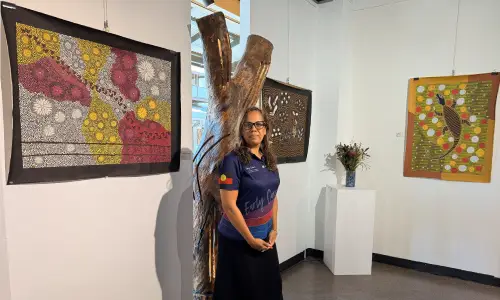
The painting on the wall is called Tracks Home. Natasha Lloyd's daughter, Celina, painted it. The story belongs to Natasha’s mum.
Dr Faye Parriman is a Stolen Generations survivor. A Noongar and Yamatji woman from Mullewa, Western Australia, she was taken from her family as a child and placed at Tardun Mission. She learned to read and write at the age of 30. She is now a lecturer and holds a doctorate.
Around the age of 8 or 9, she and a group of girls ran away. They survived on bush tucker, pressed their ears to train tracks to work out which direction was home and kept walking through the day and night. Faye collapsed beneath a tree, too weak to go on. They eventually flagged down a passing driver who dropped them at the river near Mullewa.
They were home for a couple of days. Then welfare authorities came.
That story could have stayed buried. Instead, it's hanging on a gallery wall in Darwin, painted by Faye's granddaughter and displayed alongside works by Faye herself, Natasha, and 2 more of Natasha's daughters.
Five artists. 3 generations. One Country. It started as Faye's healing journey. Now it belongs to all of them.
That's what 50 years of deadly looks like. Not just survival. Stories handed down, picked up and painted forward.
For Natasha, NAIDOC Week is also a moment to reflect on Aboriginal professionals and leaders in the workplace. She sees the expertise, commitment and resilience her colleagues bring every day, and how that strengthens the workforce and supports Territorians. She recognises how far things have come. She also knows there's still work to do.
When Ryan Stanislaus thinks about what deadly means, he goes straight to his late Pop.
Stanley Stanislaus was an Elder from the Tiwi Islands community. His knowledge ran deep, land, water, people and the connections between them. He raised 6 children and passed that understanding on. They passed it on again. Ryan is part of that line.
'This intergenerational transfer of cultural knowledge, keeping traditions alive, embodies what it means to be deadly,' Ryan says.
For a story of resilience, Ryan points to the Pormpuraaw artists of Cape York. First Nations artists from the remote Gulf community have been taking ghost nets, ocean debris and old wire washed onto their shores and turning them into striking works of art. The pieces carry cultural identity and speak to environmental responsibility at the same time.
'Rather than being negatively affected by the problem, they found a creative solution that benefits both the community and the environment,' he says.
Ghost net entanglement is a serious threat to marine life across northern Australia. The Pormpuraaw artists didn't wait for someone else to solve it. They acted.
On what deserves more recognition this NAIDOC Week, Ryan doesn't hesitate: Barunga and Garma, the festivals that communities build and run themselves.
'They keep culture strong, create real economic opportunities in remote communities and bring people together across divides,' he says. 'They are authentic, community-led celebrations that achieve things government programs and policies often fail to achieve.'
Fifty years of deadly has been built by people like Stanley Stanislaus, Elders who pass it on, communities who keep showing up and the generations that carry it forward.
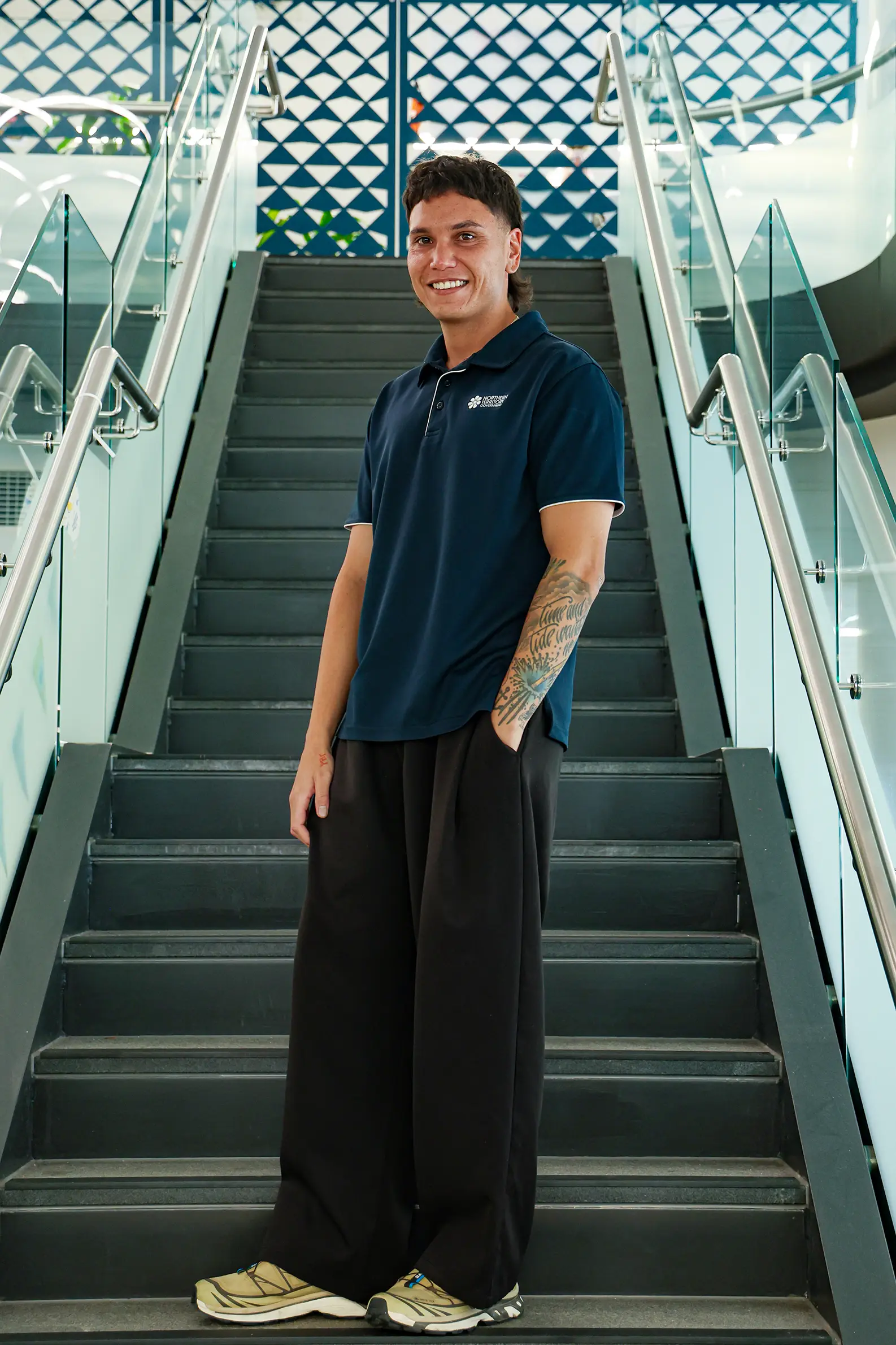
Ryan Stanislaus